
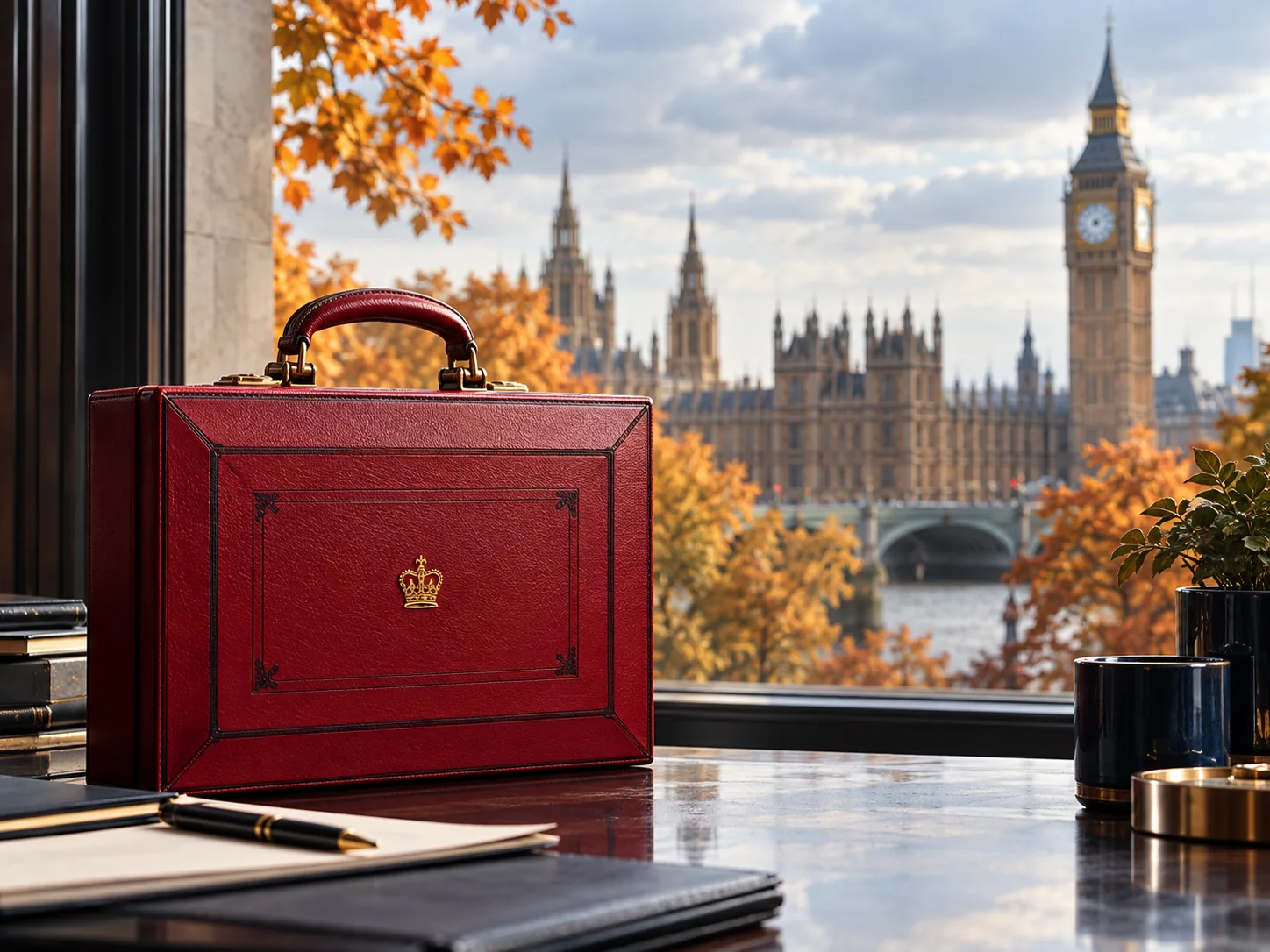
The Chancellor, John Healey, is set to deliver the Autumn Budget on Wednesday 28th October 2026.
There will often be rumours ahead of the budget itself, so to help you, here is a simple breakdown of the main areas being talked about, what we actually know right now and what you could do about it.
One of four
The money in your pocket (Income Tax Bands)
Presuming that you live and pay tax in England or Wales. Scottish income tax rates are different.
You don’t pay tax on the first £12,570 you earn. After that, you pay 20% income tax, and if you earn over £50,270, you pay 40% income tax. If you earn over £125,140 per year, you pay 45% tax. These bands have been frozen by previous budgets to help repair public finances, and the freeze is currently set to last for the next few years. Note that there is a bracket between £100,000 and £125,140 where the income tax rate is actually 60% due to the removal of the personal allowance in this bracket.
The government have stated in their manifesto that they will not raise the actual tax rates (for example changing from 20% to 21%). However, because the bands are frozen and peoples wages are increasing, people get dragged into higher tax brackets automatically.
If you get a pay rise or a bonus, a bigger chunk of it might go to the taxman than before.
You could review your pension contributions. Putting money into a workplace or personal pension is one of the most effective ways to lower your taxable income and keep more of your hard earned money.
Two of four
Selling Assets for a Profit (Capital Gains Tax) / Acting on Rumours
If you sell an asset that has gone up in value, such as a second home, buy-to-let property, or investment (outside of an ISA & pension), you may pay Capital Gains Tax on the profit. Right now, you get a capital gains tax allowance of £3,000 per tax year per person, then you pay either 18% (basic rate tax payers) or 24% (higher or additional rate tax payers) depending on your income.
The rumours have been that the Treasury is looking at raising these rates in the Autumn 2026-2027 budget. It was being speculated that Capital Gains Tax rates would be increased to match normal income tax rates (paying up to 40% or 45% tax on your profits if you are a higher or additional rate taxpayer). However, Chancellor of the Exchequer John Healey has since confirmed that if there is a raise, it will not be to this level. That does not mean there will not be a raise at all, a smaller increase is still possible.
If you acted upon this speculation and proactively sold an investment property or large amounts of shares, you could have left yourself financially worse off or found yourself unnecessarily cashing in on assets that you ideally wanted invested. It is however, worth keeping in mind that the government may look to make further changes in the future, so it is something to be aware of.
Don’t rush into a sale just because of a rumour. However, if you were already planning to sell an asset in the near future, it may be worth talking to us now so we can look at your current allowances and timelines before any rules change.
Don’t rush into a sale just because of a rumour.
Three of four
Your Tax-Free Savings (ISAs)
ISAs are still one of the best ways to save because you are not taxed on the interest or dividends within an ISA environment. Right now, you can still put up to £20,000 every tax year into a Cash ISA or Stocks and Shares ISA (or you can put for example £10,000 into each one).
The government has changed the rules from 6 April 2027, to encourage people to invest in the stock market. If you are under 65, the most you will be able to put into a Cash ISA will drop to £12,000 every tax year.
It has also introduced a flat 22% tax on any interest anybody makes on “uninvested cash” sitting inside a Stocks and Shares ISA. This is to prevent people investing in a Stock and Shares ISA but keeping the money in cash.
People under age 65 will also be banned from transferring money from a Stocks and Shares ISA into a Cash ISA from that date.
If you are under 65 and want to protect more than £12,000 a year from the taxman, you may have to consider also starting a Stocks and Shares ISA alongside a Cash ISA.
If you leave money within a Stocks and Shares ISA in their holding or Cash account, you may incur the new 22% tax penalty. (Note: If you are 65 or over, you are only exempt from the lower contribution limit, meaning you keep your full £20,000 Cash ISA allowance).
Make sure you are maximising your £20,000 ISA allowance before 5 April 2027. If you have cash sitting in standard bank accounts where it may be taxed, we can help you review whether a Stocks & Shares ISA, Cash ISA or a different investment option fits your long term goals.
Four of four
Passing Money to Family (Inheritance Tax)
When you pass away, the first £325,000 of what you leave behind may be tax free (plus another £175,000 if you pass a home to your children or grandchildren) depending on any gifts you have made in the previous 7 years. Anything over this amount may be taxed at 40% inheritance tax. If you are married or in a civil partnership, any unused allowances could transfer to your partner, meaning a couple can potentially leave up to £1 million entirely inheritance tax free. These basic limits are frozen until April 2031.
The rules for pensions are moving from speculation to reality. From 6 April 2027, any money left in your pension pot when you die will count as part of your estate and may be hit by a 40% Inheritance Tax bill. The only exception is your spouse or civil partner, who can still inherit your pension inheritance tax free but they may then need to complete their own planning.
Saving into a pension was historically a way to pass wealth down to your family inheritance tax free. If your current estate plan relies heavily on this loophole, your family could face a much larger tax bill in the future and as such financial advice should be sought on your options.
Don’t panic or make sudden changes to your pension right now. Inheritance tax planning takes time to get right. We recommend setting up a review with us from November so we can look at your estate plan as soon as the final technical details from the Autumn Budget are announced.
From 6 April 2027, any money left in your pension pot when you die will count as part of your estate.
What should I do?
It is easy to worry when a Budget is coming up, but making quick decisions based on rumours in our opinion is not recommended, unless you understand all the risks. For now, the best thing to do might be to wait for the facts on 28th October 2026. Once the Chancellor finishes his speech, we will look at exactly what has changed and guide you through it.
Want to talk this through?
A free introductory call with an adviser. No obligation afterwards.
This article is for general information only. It is not personal advice and it is not a recommendation. The value of investments and the income from them can fall as well as rise and you may get back less than you invested. Past performance is not a reliable indicator of future results. Tax treatment depends on individual circumstances and may change. Fernleigh Wearden & Company Ltd is authorised and regulated by the Financial Conduct Authority, firm reference number 929372.